An Intelligent Connected Ecosystem for Remote Pet Care
The Problem
I believe that one problem almost all pet owners may face is worrying about their pets when they have to leave home because of work or school. Most existing pet products only solve a single problem, such as feeding, monitoring, or cameras, but these devices are usually disconnected and lack overall coordination. This forces users to switch back and forth between different devices and apps, yet they still cannot form a clear understanding of their pet’s condition.
Animals actually have very rich and complex emotions, but they are unable to clearly express discomfort or abnormal behavior. If these early signals are ignored, they may further lead to health or emotional problems. In this situation, a multi-device, intelligent ecosystem becomes a reasonable solution, because pet care requires continuous monitoring and timely intervention.
My Role
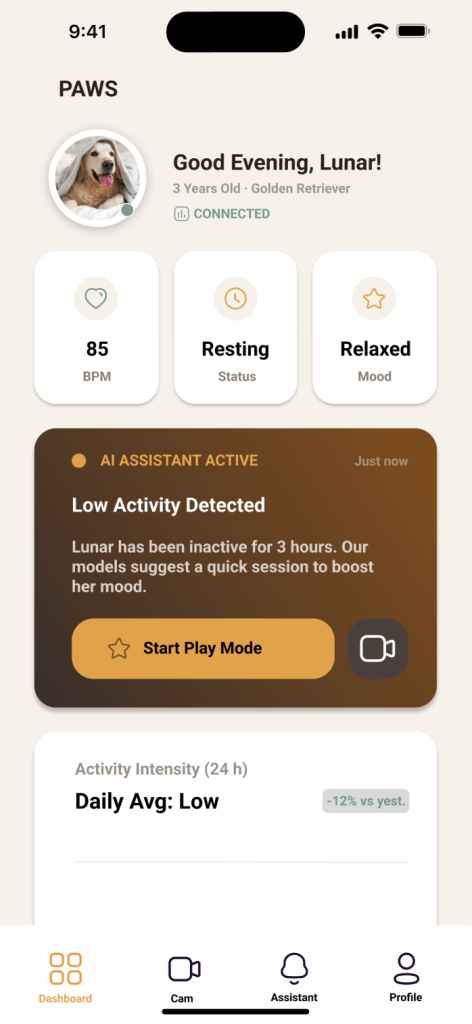
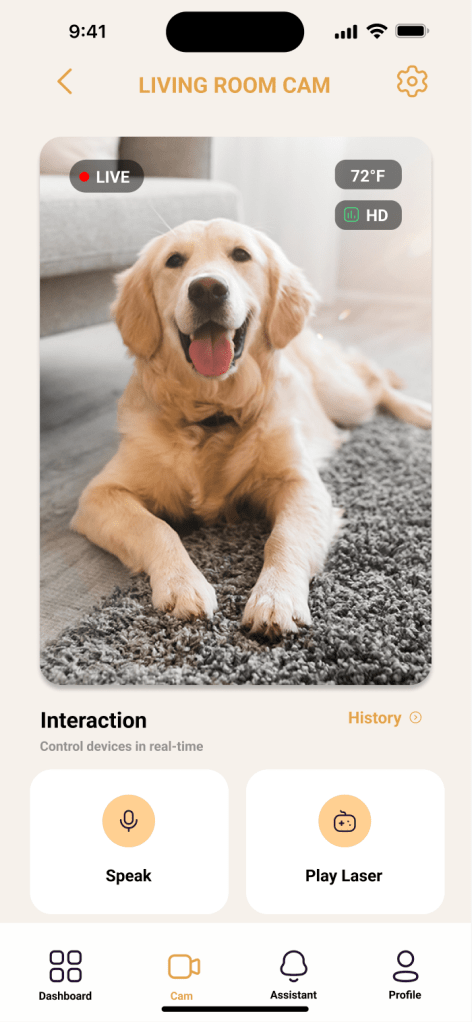
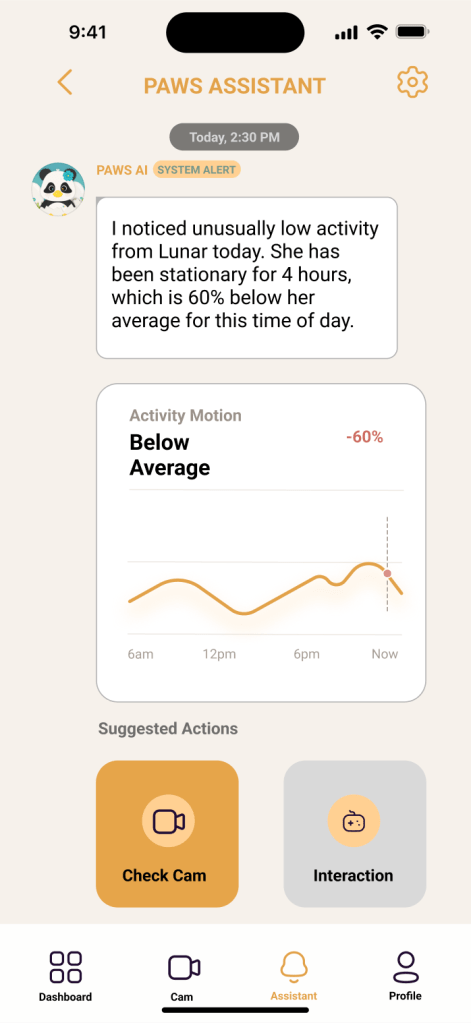
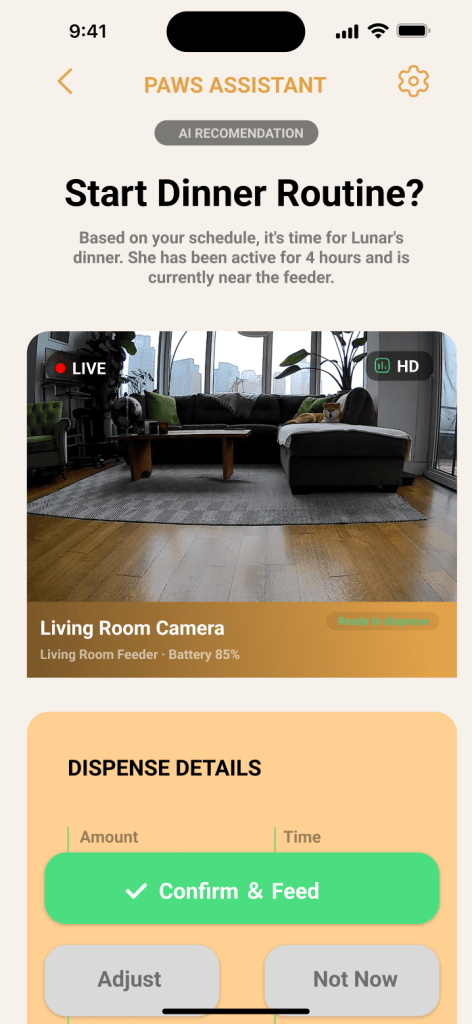
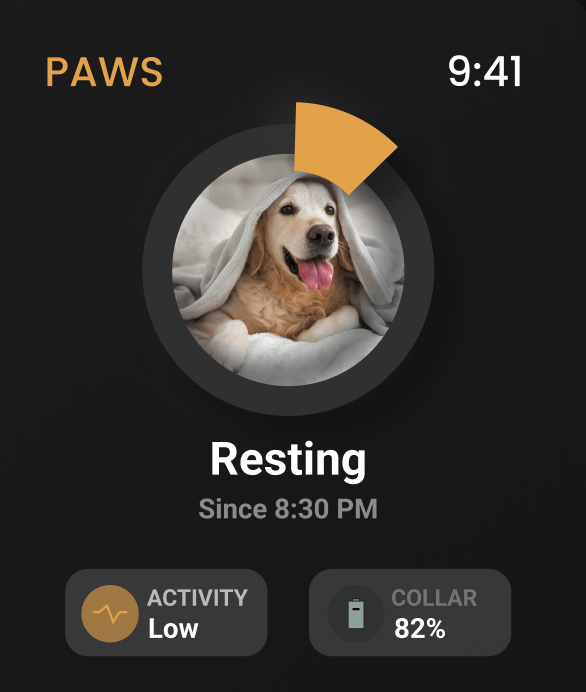
In this project, I mainly focused on the overall design of the PAWS intelligent connected ecosystem. What I designed was not a single product, but a system in which different devices can work together. Based on this idea, I designed the ecosystem journey map, component breakdown, and key interface screens across mobile, wearable, and AI touchpoints.
My decision-making approach was human-centered, so I carefully considered in which situations AI should act automatically and in which key moments users need to be involved in decision-making. I needed to ensure that the entire ecosystem is logically coherent and easy to understand.
Process
Before formally starting to design the entire system, I first considered how to define the boundaries of the system. For example, when are the key moments in which users truly need support, and what kinds of interactions would feel comfortable and smooth for them. Based on these questions, I created a series of journey maps and conducted research on existing pet care–related apps on the market.
I focused more on continuity across devices, making sure that each device has a clear role and that there are no overlapping functions. I also introduced AI as a supportive layer that is only used to monitor data and provide suggestions, but the real decisions still need to be made by the users themselves.
Ecosystem Journey
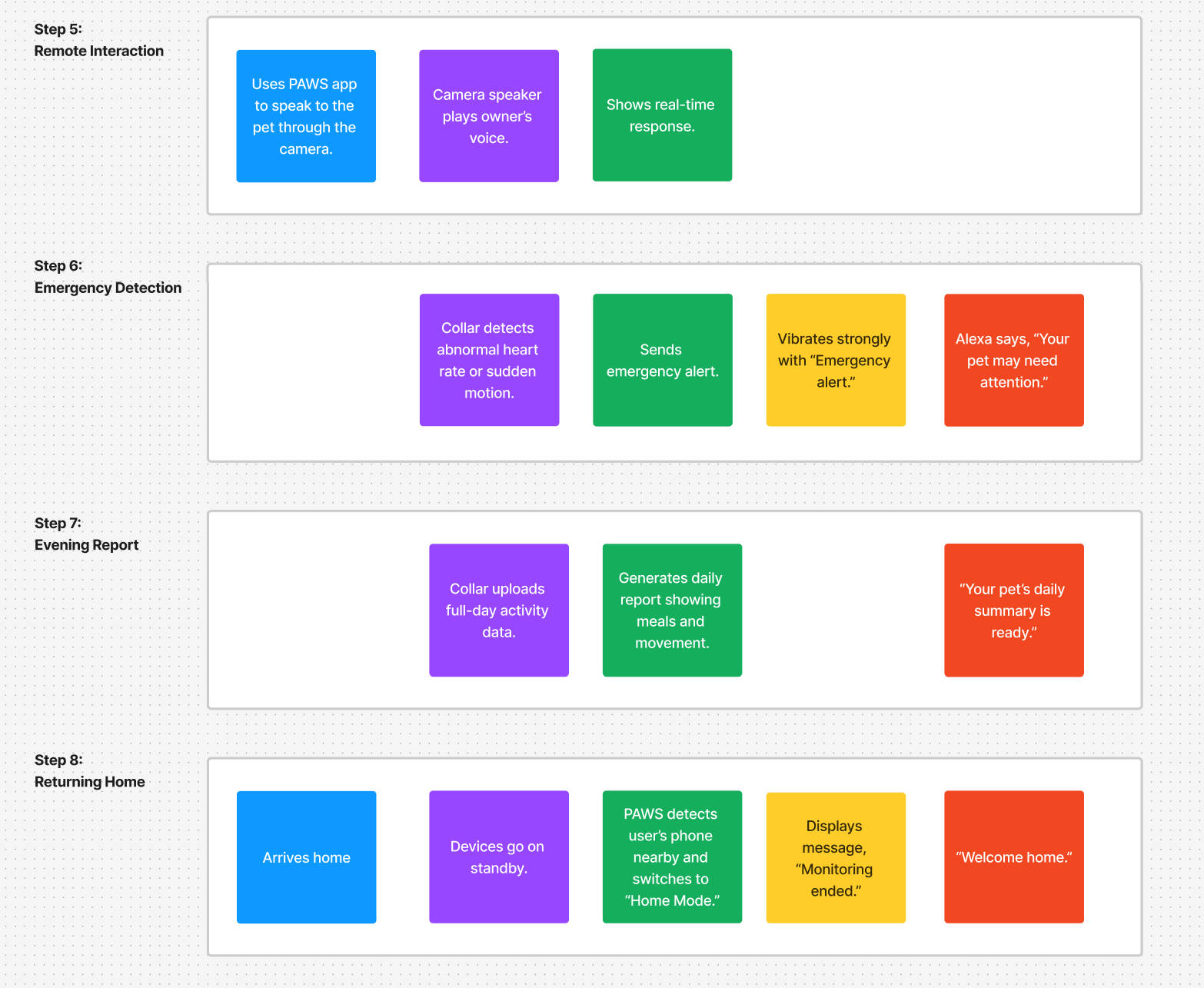
The ecosystem journey begins when the pet owner turns on “Away Mode” in the PAWS app before leaving home. This action activates the connected devices in the background, allowing the collar, camera, and feeder to start monitoring and syncing data. Throughout the day, information such as activity level, short video clips, and feeding records moves between devices and is summarized in the mobile app and wearable for quick check-ins. Most routine tasks, like monitoring and scheduled feeding, are handled automatically, while the user can step in at key moments, such as checking the live camera feed or interacting with the pet remotely. In urgent situations, abnormal data triggers alerts across multiple devices to ensure visibility. When the owner returns home, the system detects the change in context and switches back to “Home Mode,” ending active monitoring.

Components Overview
PAWS is built as a five-part ecosystem, with each component playing a distinct role while supporting the others. The primary intelligent hub acts as the central coordinator, integrating data and enabling automation. The mobile and tablet app serves as the main control surface, giving users visibility and manual control when needed. The smart pet collar functions as the primary sensing layer, continuously collecting activity and health data. The AI agent provides conversational access to system insights and actions, while the human-in-the-loop component ensures that critical decisions remain transparent and user-controlled. Together, these components form a connected system that balances automation with human judgment.

Solution

Demo Video
Reflection
In the whole process, I realized that a good cross-device design is not about making all interfaces look the same, but about giving each device a clear and distinct role. Designing the interfaces themselves was not the hardest part, what was more challenging was truly putting myself in the user’s position and thinking about what kind of design would feel smooth and comfortable during real use. In this project, I see AI as a tool that helps users recognize patterns or potential issues rather than making decisions for them. Since this system involves private spaces, I intentionally included moments where users can confirm, override, or opt out of automation. If the system were to become more intelligent in the future, I would want AI to learn the daily routines of different pets and owners. Although this may cause additional privacy concerns, it could make the system more personalized and responsive if handled carefully. The most difficult part of the design process was connecting different systems together, as I had not worked on a cross-device ecosystem at this scale before, and maintaining consistency and smoothness across devices was challenging.
 Michelle Wu /Digital Designer