What is ST.AR?
Summary
The St.A.R App utilizes GIS navigation for animal rescuers and lovers to detect and manage stray pets, trap-and-release animals, and other stray wildlife. St.A.R App will streamline the process of locating lost pets, facilitating their return to owners, managing community-based trap-and-release programs for feral animals, and assisting in caring for strays/stray pets. The goal is to relieve pet owners of the chaos that ensues with stray pets and increase safety for stray pets/wildlife.
Primary User
The primary users of St.A.R. App are animal rescuers and animal lovers. This includes communities that are around trap-neuter-release (TNR) animals.
Rationale
With the St.A.R. App’s use of GIS navigation, an easy pinpoint navigation system like Google Maps, direct messaging features, informational data for common questions from new stray pet owners, and profile setup for animals, this app will reduce the risks associated with stray animals and inexperienced fosters or adopters. It will also connect communities by encouraging support and assistance during the challenges of caring for strays. Additionally, this app will allow users to set up a profile for TNR strays or lost-and-found pets. This allows users to distinguish and identify if the animal is a stray, TNR, or a lost pet.
What’s interesting?
Increase in Strays:
There has been a 10% increase in overall intake compared to 2021, driven primarily by dogs. Non-live outcomes (including shelter euthanasia and deaths in care) for dogs are also on the rise—up to 31% from 2022 and up 85% from 2021 (Shelter Animals Count, 2023).
7.6 million pet animals enter into strays every year (Abdulkarim, Goriman Khan, & Aklilu, 2021).
In 2020, 2% more animals left shelters than entered; however, 4% more animals entered shelters than left in 2022. Each percent representing thousands of animals (Vox, 2023).
Trap-Neuter-Release (TNR) and Catch-Neuter-Release (CNR):
Luckily, there has been a decrease in cats and dogs getting euthanized in the U.S. as numbers dropped from 13.5 million euthanized animals in 1973 to 733,000 in 2018. This is largely due to the TNR method (Chirico et al., 2020).
Pets with Adoptees and Fosters:
The amount of stray pet adoption continues to grow, as 4% of the 65.1 million pet dogs and 24% of 46.5 million pet cats were taken in as strays or caught outside in 2021-2022 (The Humane Society of the United States, n.d.). There is a starting trend for the desire or care for strays.
Largely due to mental illness, many pets are mistreated and abused by their owners. 10 million animals get abused a year, with 86% of the abusers getting arrested for animal cruelty. 250,000 animals are also victims of animal hoarding. (Humane Society International, n.d.)
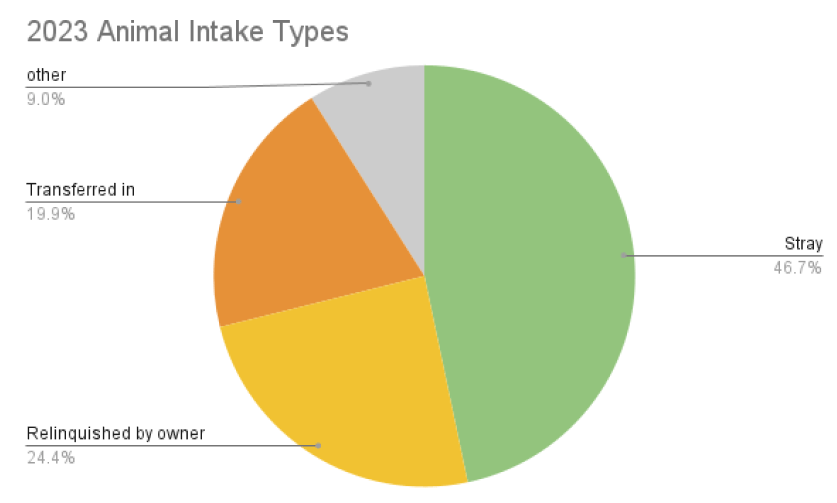
With the increase in stray animal intake, there has been an increase in “non-live” outcomes. 46.7% of shelters in 2023 have strays, 19.9% are transferred in from other shelters, and 24.4% are relinquished by owners (Shelter Animals Count, 2023).
What do we have?
Overview:
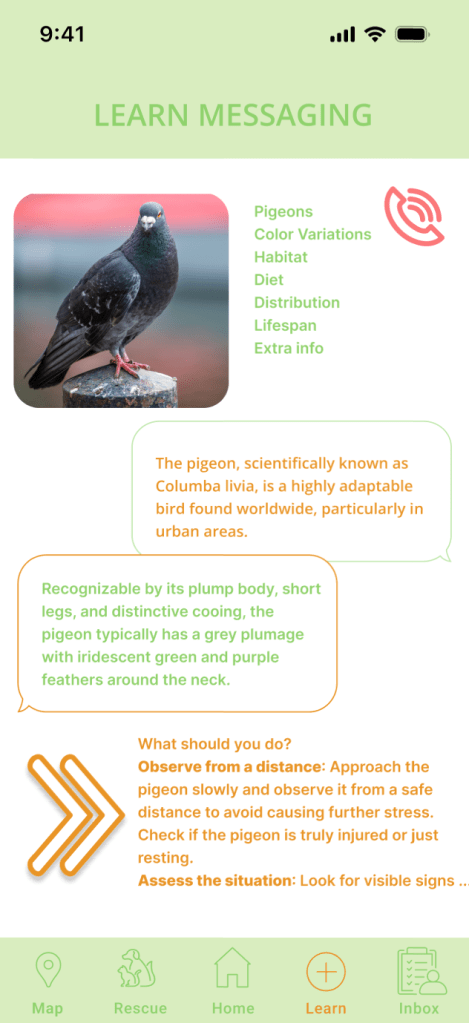
This app aims to help users effectively manage and report sightings of stray animals. It is designed to be useful for all types of stray animals, not limited to finding adopters. The app’s main feature is an interactive map that allows users to mark the location of a stray animal. Users can upload pictures and details about the animal to both the map and the community space. Additionally, the app provides educational information, tailored to the type of animal spotted, to guide users on how to handle the situation.
For example, if someone finds a Golden Retriever, they can mark its location on the map, upload photos and details, and the app will offer guidance on how to safely approach and help the dog. This ensures that users have both the tools and knowledge to act effectively.
Functionality:
Interactive Map
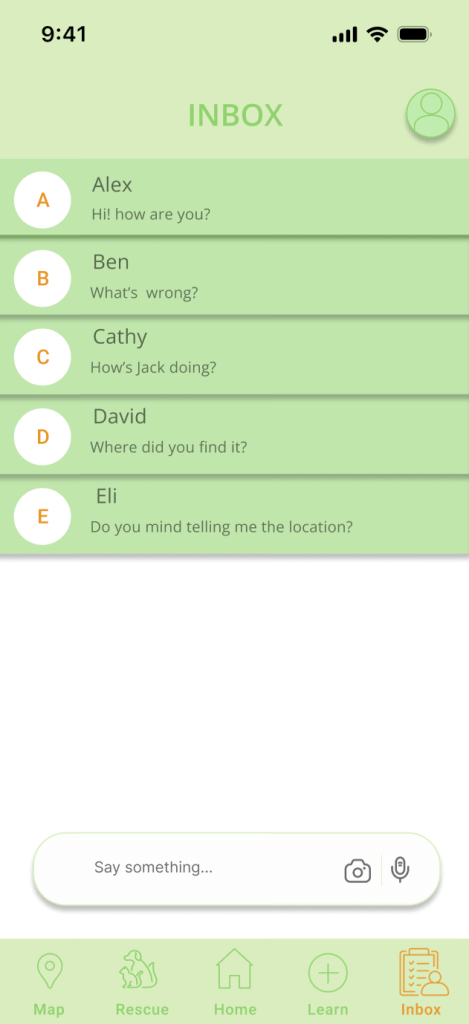
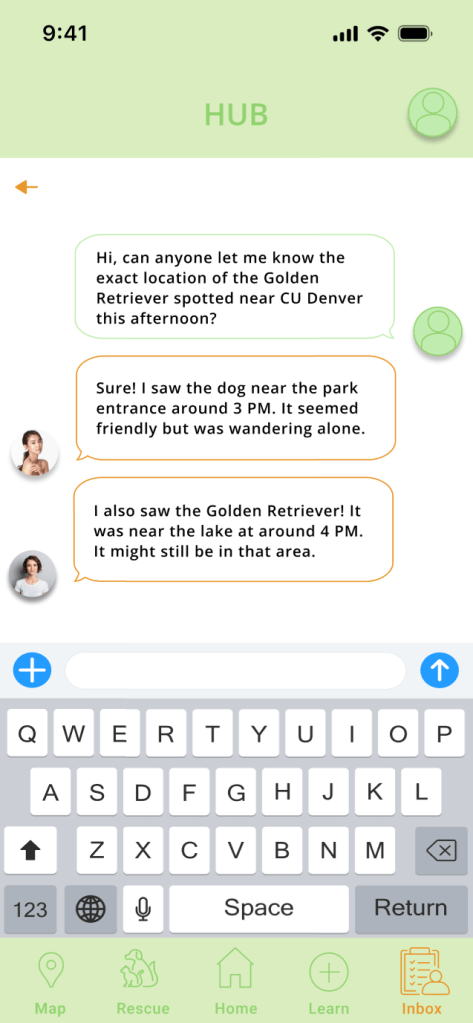
Community Hub
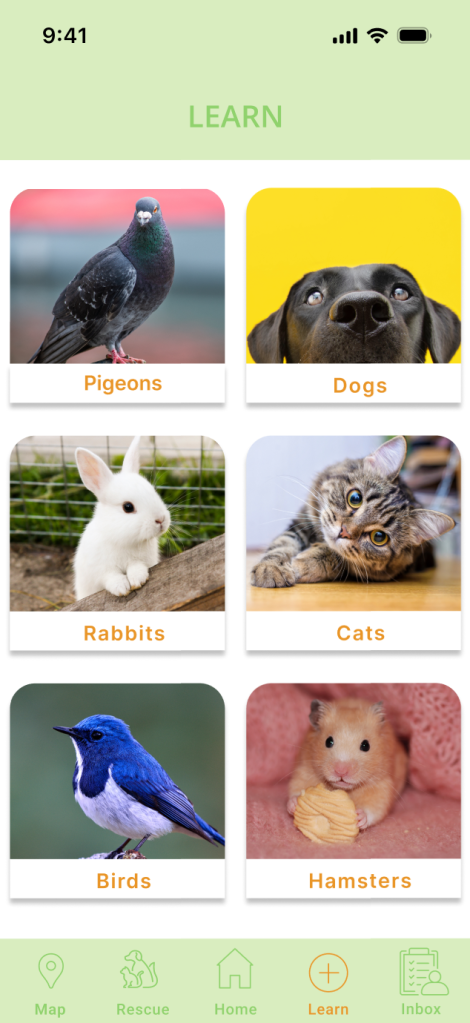
Educational Pop-ups
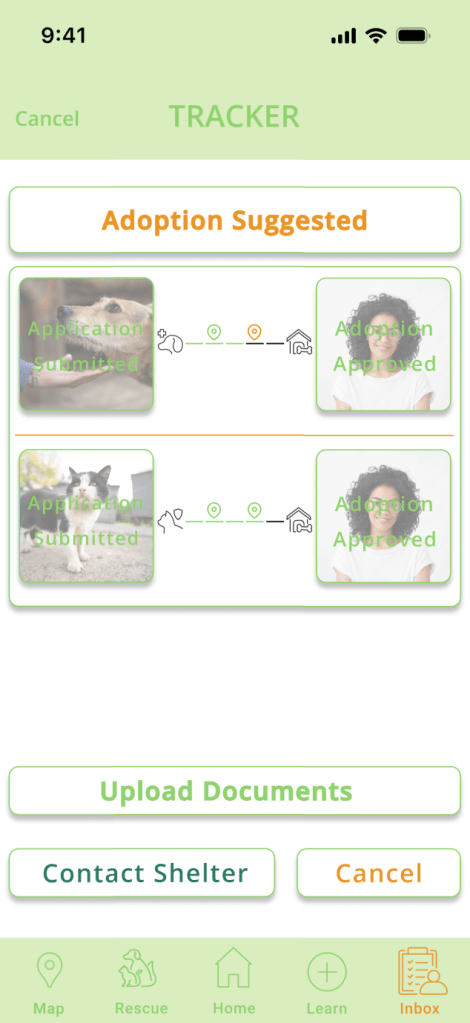
Animal Information Database Adoption Progress Tracker
For this project, I used Figma to create the app design and prototype. I also used Adobe Illustrator as a supporting tool to make detailed icons and graphics. These tools helped me finish the project efficiently and keep the design consistent.
My Approach to the Project
I followed a step-by-step process to complete the project:
- Setting the Goal: I started by defining the app’s purpose, which is to support stray animal rescue efforts while being easy and helpful for users.
- Sketching Ideas: I created basic sketches to plan out the screens and their layout.
- Building the First Version: Using Figma, I made an initial draft of the design with the main features and a simple layout.
- Review and Changes: After reviewing the first draft, I made changes to the colors, icons, and overall style to match the app’s theme better.
- Final Version: I polished everything to complete the final design.
Tasks I Completed
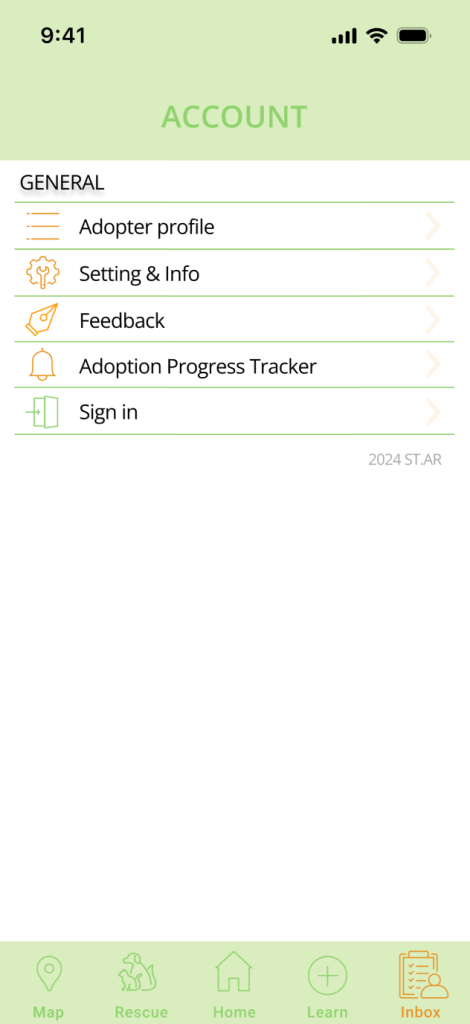
I designed eleven interactive screens for the app, focusing on the main features, including:
- Interactive Map: Helps users find nearby animal shelters and report stray animals.
- Chat Interface: Allows users to communicate with volunteers and rescue groups.
- Animal Knowledge Section: Provides educational tips on animal care.
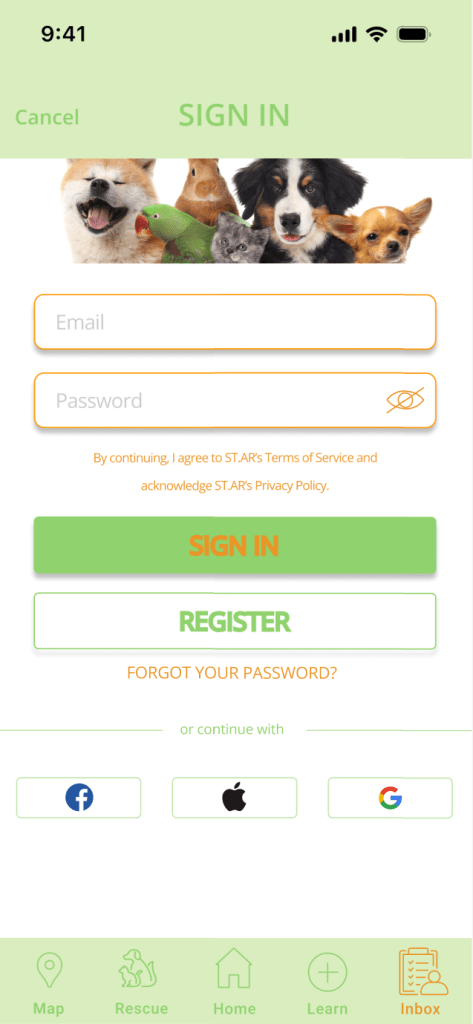
- Login Page: A simple and secure way for users to log in.
- Settings Page: Lets users customize their experience.
- Adoption Page: Shows detailed profiles of animals available for adoption.
Non-Design Work
I also worked on tasks beyond design:
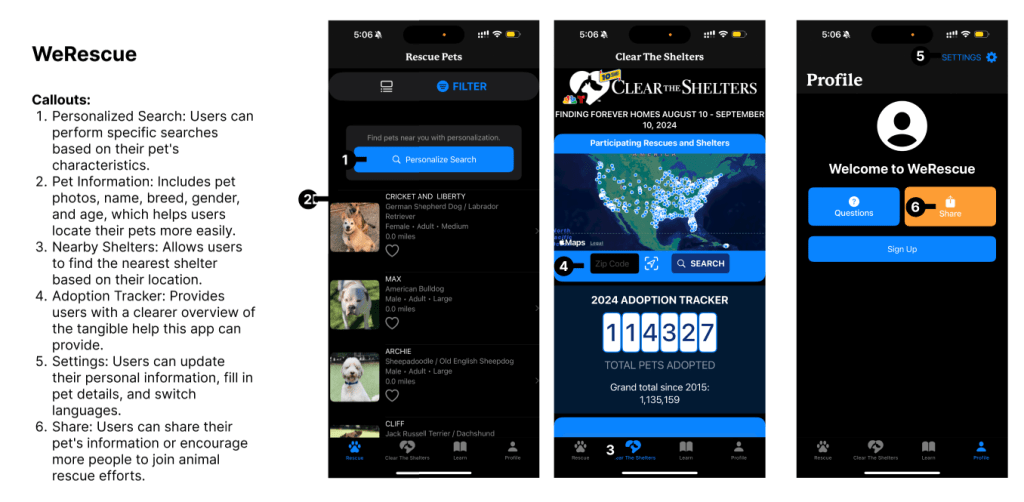
- Market Research: I analyzed similar apps to learn what works and what doesn’t, so I could make the app better.
- Content Creation: I wrote the text for the prototype, like instructions, feature descriptions, and animal profiles.
Scheduling and Extra Work
I helped with project management and team communication:
- Team Meetings: I organized weekly meetings to discuss progress and updates, and I stayed in touch through messages at least three times a week.
- Icon Search: I went the extra mile to find different sets of icons, making sure they matched the app’s look and feel.
Research and planning
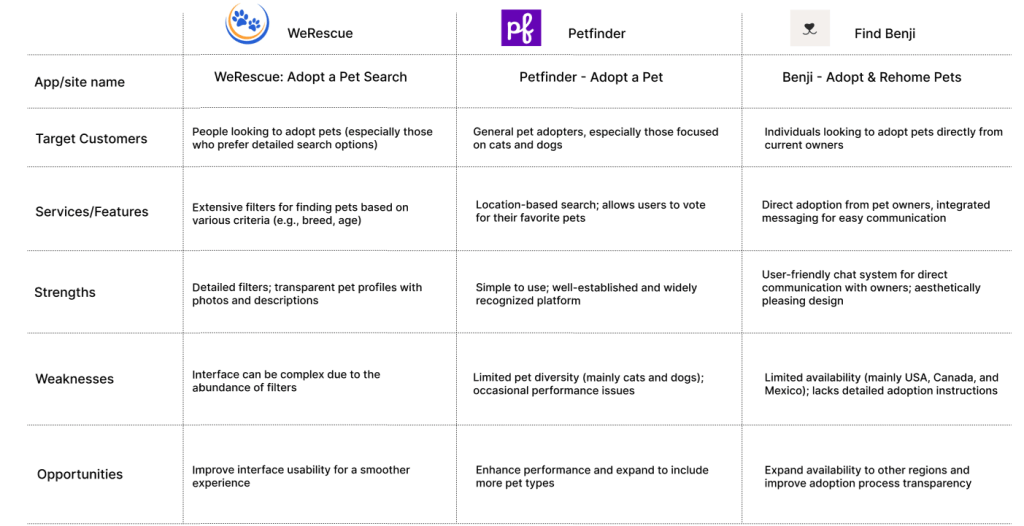
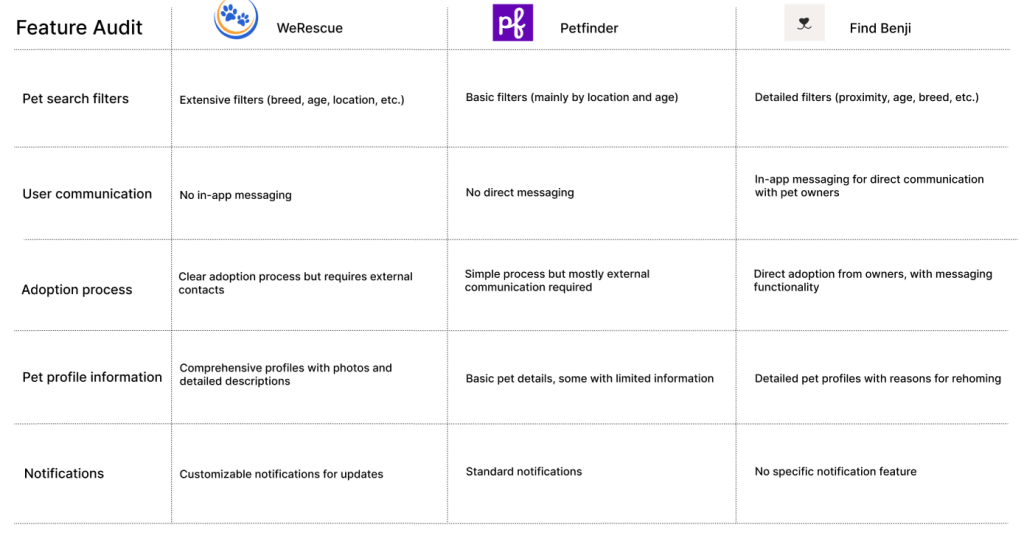
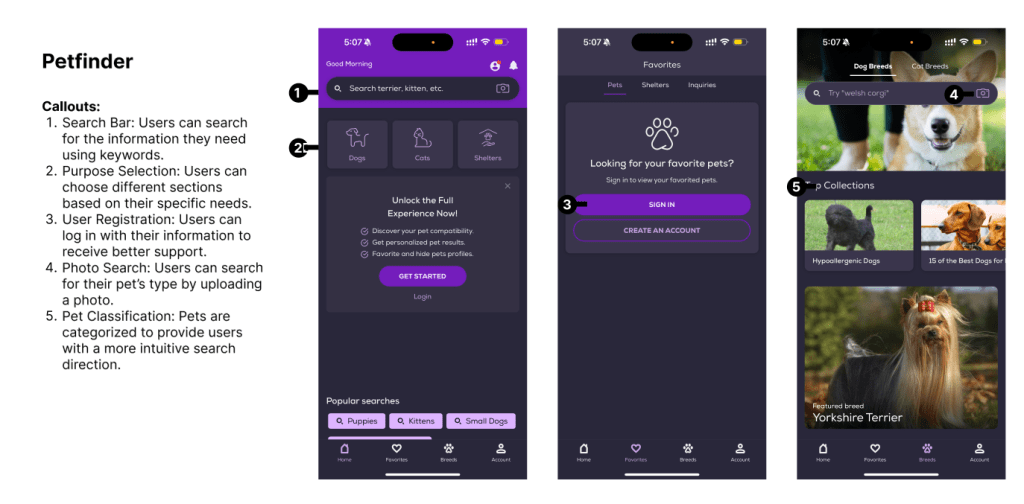
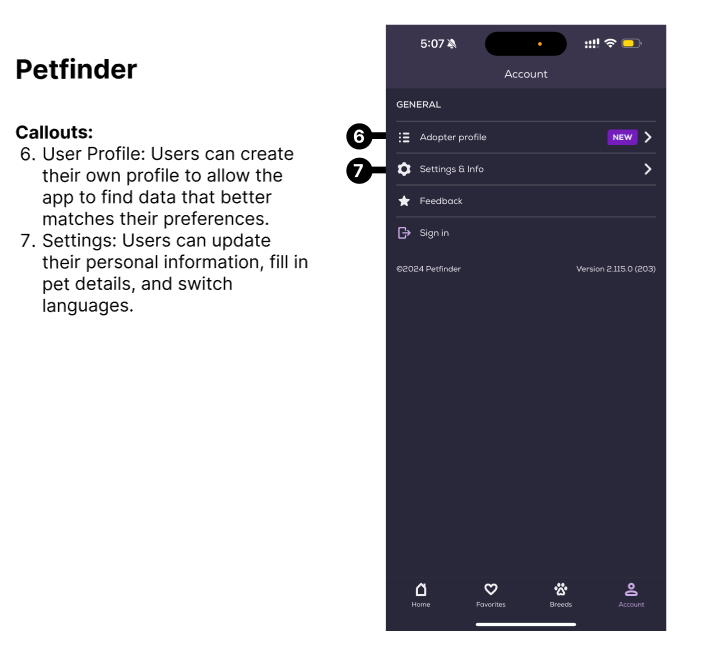
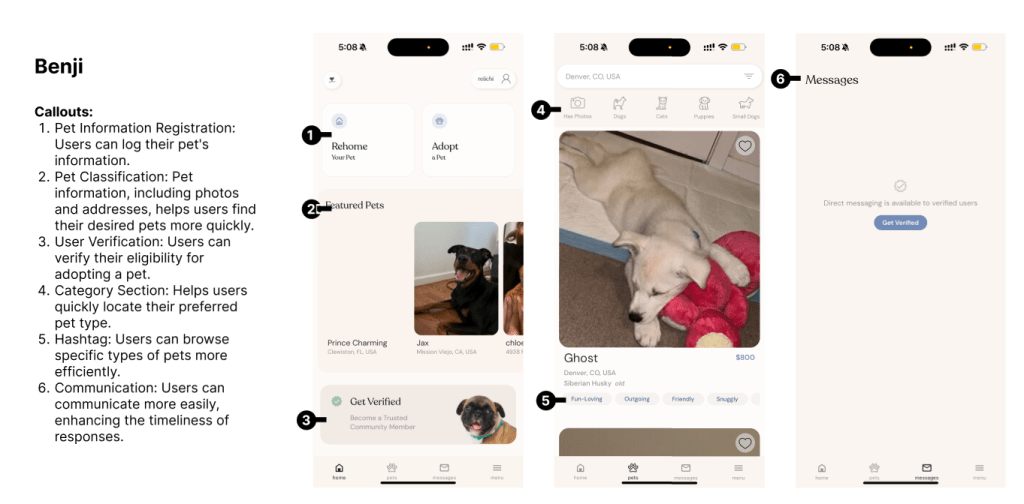
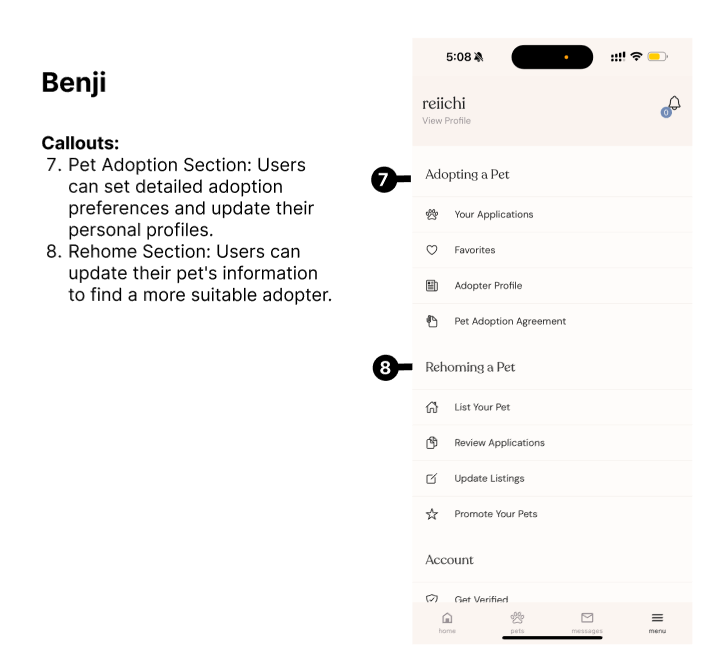
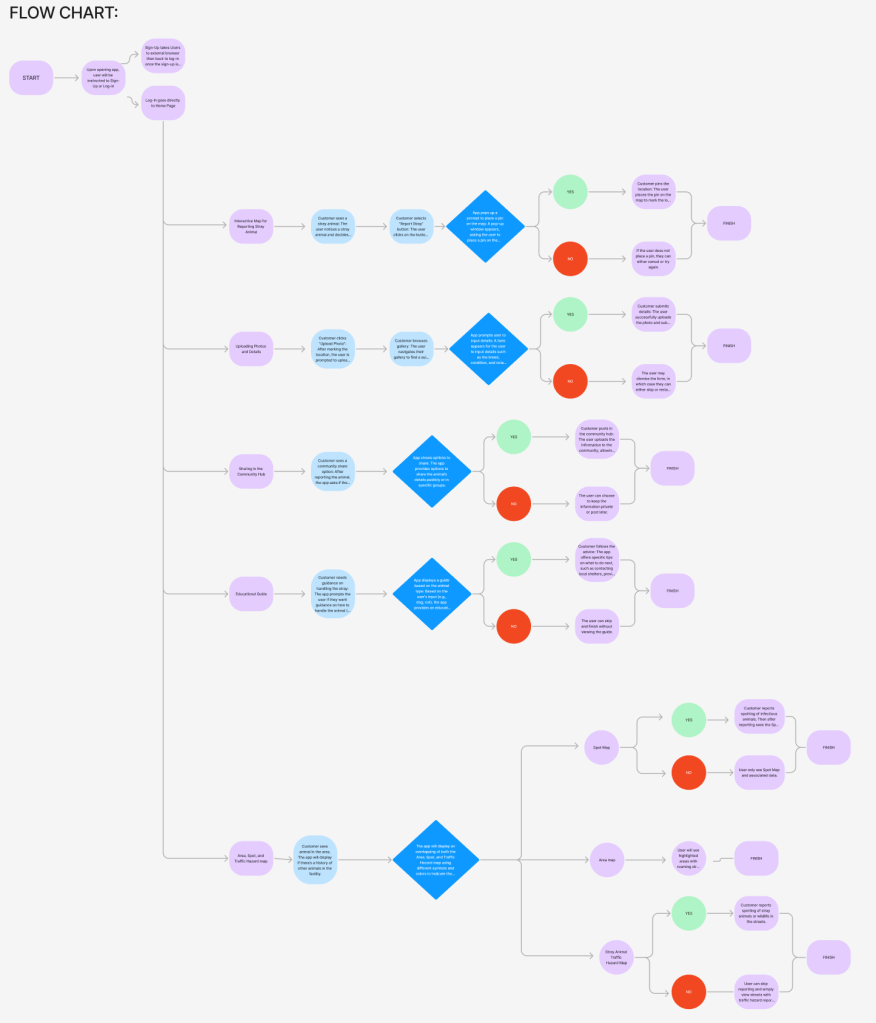
In my design research and planning phase, I started by comparing similar apps to understand what features worked well and what needed improvement. The competitive analysis charts I created (shown below) helped me see how platforms like WeRescue, Petfinder, and Benji organize their search filters, communication tools, and adoption processes. By looking at their strengths and weaknesses side by side, I realized that my app could focus on better messaging features, clearer adoption steps, and more detailed animal profiles. I also created flow charts and basic sketches to outline user paths, which helped me visualize how someone would move through the app. Although I didn’t develop a specific persona for this project, these early visuals guided my decisions and gave me a solid foundation to refine my design.
Screen designs – Michelle’s part
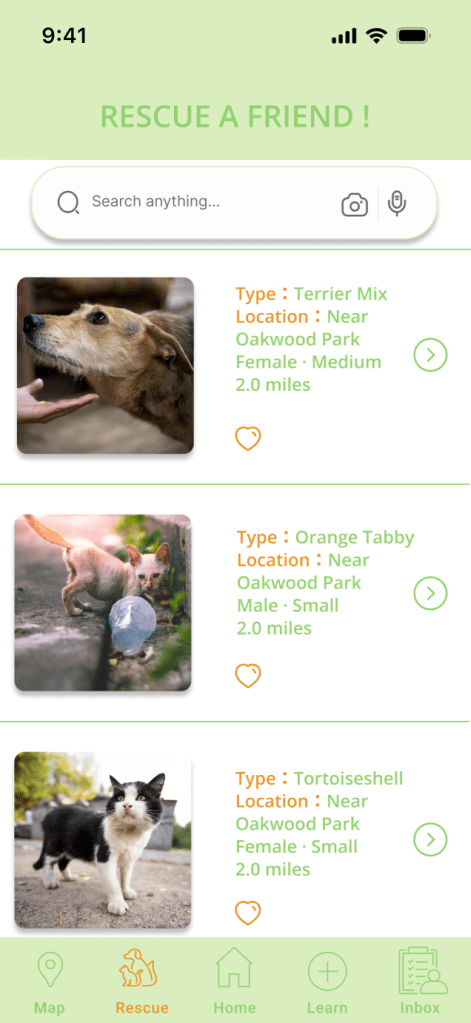
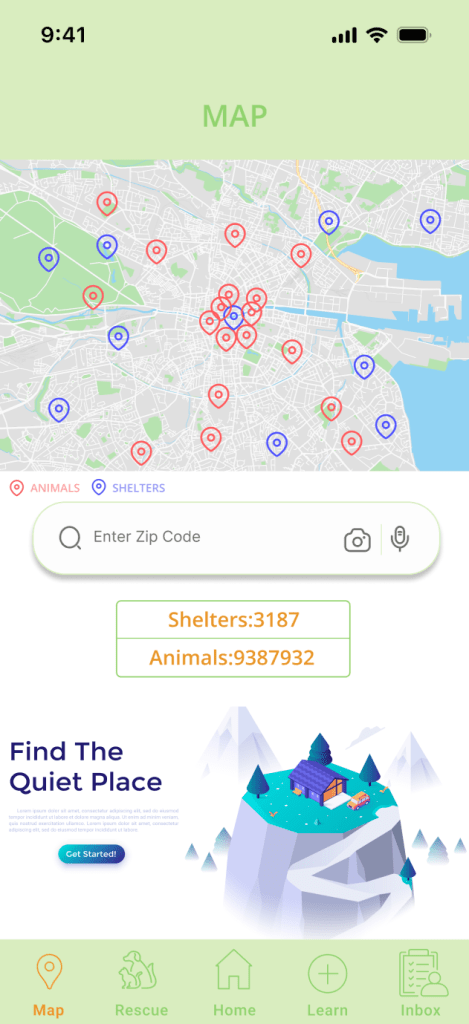
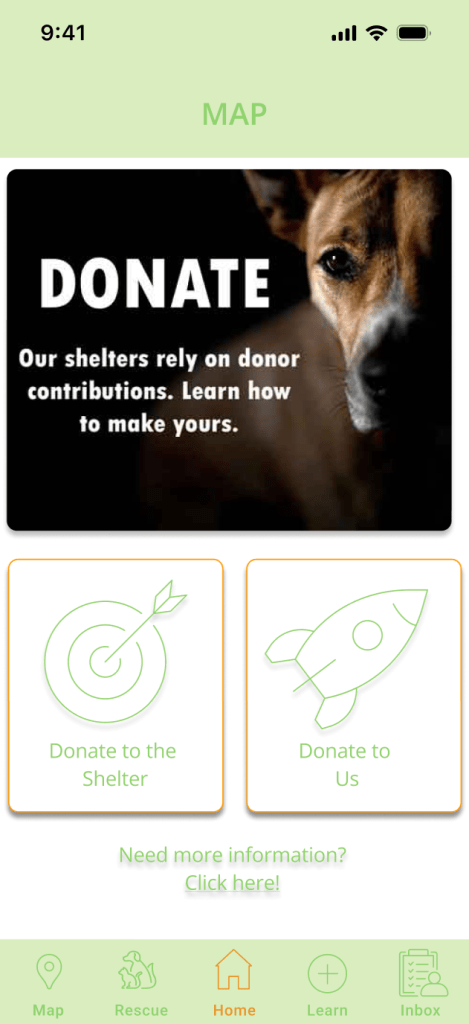

Need more info? Check this!
Areas of improvement
When I think about ways to improve my design, I realize that some parts might still feel a bit confusing for new users. Maybe I could add short hints or tooltips to guide people through each step, so they know exactly what to do next. Also, even though I tried to keep the layout simple, testing the design with a few classmates or friends could help me see where they get stuck. If I notice they’re unsure about how to use certain features, I could rearrange the navigation or change some labels. And I should consider accessibility more; I need to make sure text is easy to read and buttons are large enough to tap. This would help everyone feel comfortable using the app.
Sources and citations
Abdulkarim, A., Goriman Khan, M. A. K. B., & Aklilu, E. (2021). Stray animal population control: Methods, public health concern, ethics, and animal welfare issues. *World Veterinary Journal*, *11*(3), 319-326. https://doi.org/10.54203/scil.2021.wvj44
Centers for Disease Control and Prevention. (2023). *Zoonoses and the one health approach*. https://wwwnc.cdc.gov/travel/yellowbook/2024/environmental-hazards-risks/zoonoses-one-health-approach-#:~:text=Zoonotic%20Diseases,-Zoonotic%20diseases%20are&text=Approximately%2060%25%20of%20all%20known,%2C%20Salmonella%2C%20and%20rabies%20virus.
Chirico, F., Nucera, G., & Magnavita, N. (2020). COVID-19: Protecting Healthcare Workers Is a Priority. Infection Control & Hospital Epidemiology, 41(9), 1117-1117. https://doi.org/10.1017/ice.2020.148
Humane Society International. (n.d.). *Abuse and neglect*. https://www.hsi.org/issues/abuse-neglect/
The Humane Society of the United States. (n.d.). *Pets by the numbers*. HumanePro. https://humanepro.org/page/pets-by-the-numbers
National Center for Biotechnology Information. (2023). *Environmental and zoonotic diseases*. https://www.ncbi.nlm.nih.gov/pmc/articles/PMC10458268/
Princeton Public Health Review. (2022, November 5). *Looking at possible anthropogenic factors driving the increase of zoonotic disease*. https://pphr.princeton.edu/2022/11/05/looking-at-possible-anthropogenic-factors-driving-the-increase-of-zoonotic-disease/
Shelter Animals Count. (2023). *Intake and outcome data analysis: Q3 2023*. https://www.shelteranimalscount.org/intake-and-outcome-data-analysis-q3-2023/
Vox. (2023, August 16). *Why animal shelters are overwhelmed right now*. https://www.vox.com/future-perfect/2023/8/16/23833307/pets-animal-shelters-cats-dogs-affordable-housing-inflation
World Health Organization. (n.d.). *Zoonotic diseases*. WHO Regional Office for the Eastern Mediterranean. https://www.emro.who.int/fr/about-who/rc61/zoonotic-diseases.htm
 Michelle Wu /Digital Designer